This Week's Best Picks from Amazon

Please see more curated items that we picked from Amazon here .

October Skywatching: A Celestial Celebration Awaits

Current meteor showers October sky watching events

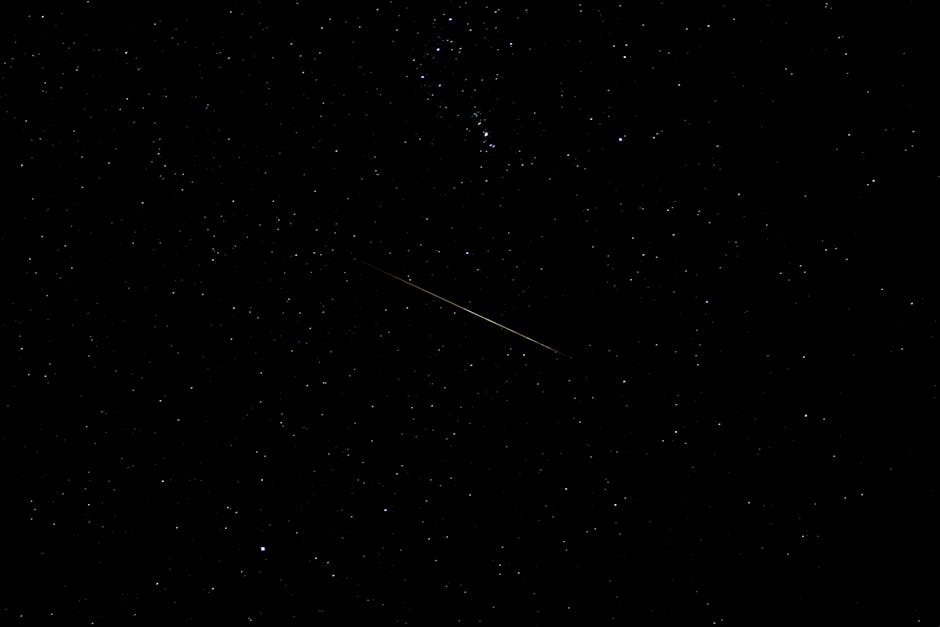
As the nights grow longer in October, skywatchers are in for a treat. According to recent commentary from NASA, this month features not one, but two spectacular meteor showers: the Draconids and the Orionids. Both events promise to light up the night sky, making it an ideal time for stargazers to gather their friends and family for an evening of cosmic wonder.

Current meteor showers October sky watching events

The Draconid meteor shower peaks around October 8, and its radiant point is located in the constellation Draco, which can be found in the northwest sky. This shower is known for its unpredictable nature, sometimes delivering a quiet show, while other times, it can erupt into a breathtaking display of shooting stars. Just a couple of weeks later, on October 21, the Orionids will take center stage, offering yet another chance to witness the beauty of meteor showers.

Current meteor showers October sky watching events

In addition to the meteor showers, October also hosts a supermoon, which is when the moon appears at its largest and brightest. This celestial event provides a stunning backdrop for meteor watching, enhancing the overall experience. Experts argue that the combination of a supermoon and meteor showers creates a unique opportunity for both novice and seasoned astronomers alike to appreciate the wonders of our universe.

To make the most of these skywatching events, it’s essential to find a dark location away from city lights. Bring blankets or reclining chairs for comfort, and don’t forget to pack some snacks! The experience is as much about enjoying the company as it is about observing the stars.

As you prepare to gaze at the night sky, remember to check your local weather forecast to ensure clear skies. Cloudy nights can obscure the best views, so timing your observations could make all the difference.

In summary, October is a month of celestial spectacles that invites us to look up and wonder. Whether it’s the fleeting beauty of meteor showers or the majestic glow of a supermoon, the sky has a lot to offer. So grab your telescope or simply lie back and enjoy the show!

  • Plan your skywatching nights around the peak times of the Draconid and Orionid meteor showers.
  • Find a dark location away from city lights to enhance your viewing experience.
  • Check the weather forecast in advance to ensure you have clear skies for optimal stargazing.

Source

Comments

Popular posts from this blog

February is shaping up to be an exciting month for skywatchers, according to NASA. With clear nights, you'll be able to spot the moon along with several bright planets in our solar system.

Venus , the dazzling planet associated with the Roman goddess of love, will be particularly brilliant in the west after sunset. Its bright presence will be hard to miss, shining like a jewel in the twilight sky. Jupiter , the king of the planets, will also be visible in the evenings. Its majestic presence, accompanied by its moons, makes for a stunning sight through any telescope. Mars , identifiable by its amber-orange hue, continues to captivate observers. The Red Planet's distinct color makes it stand out in the night sky, and with a decent pair of binoculars or a telescope, you might even catch a glimpse of its surface features. For a closer look at these celestial bodies, consider using a pair of binoculars or a telescope . Binoculars are great for spotting Venus , Jupiter , and Mars , while a telescope will give you an even better view of Mercury and Saturn . Binoculars offer a wide field of view and are easy to use, making them perfect for beginners and experienced skywatc...

February is one of the best times of the year to spot the Andromeda Galaxy, our nearest galactic neighbor. This guide will help you find and observe this magnificent celestial body with the naked eye, binoculars, and telescopes.

The Andromeda Galaxy has fascinated humans for centuries. Known as the Great Andromeda Nebula until the 20th century, it was mentioned by Persian astronomer Abd al-Rahman al-Sufi in his book "Book of Fixed Stars" around 964 AD. Early astronomers believed it to be a nebula within our Milky Way. It wasn't until 1924 that Edwin Hubble confirmed Andromeda as a separate galaxy, vastly expanding our understanding of the universe. How to Spot Andromeda Finding Andromeda with the Naked Eye To find Andromeda, first locate the constellation Cassiopeia, which resembles an "M" or "W" shape in the sky. Draw a line from the star Schedar in Cassiopeia to the Andromeda Galaxy. You can also start from the Great Square of Pegasus and trace the constellation Andromeda to the galaxy. In dark skies, Andromeda will appear as a faint, fuzzy patch. Using Binoculars for a Closer Look Binoculars are excellent tools for beginners. The Celestron - Cometron 7x50 Binoculars are pa...

Are you a North Texas or South Oklahoma sky watcher looking for the perfect spot to gaze at the stars? Look no further! The Texas Astronomical Society (TAS) offers a fantastic dark sky observing site in Atoka, Oklahoma. This location is ideal for stargazing, with its low light pollution and clear skies.

  With a family membership of around $50, the Texas Astronomical Society (TAS) provides access to its dark sky star gazing site in Atoka, OK, which includes an observatory, telescope pads, barbecuing area, and camping spots. Why Now is the Best Time to Start Gazing This month is an excellent time to start planet watching! You can spot some of the brightest planets in the night sky, including Jupiter , Saturn , and Venus . Additionally, you can catch a glimpse of the Andromeda Galaxy , which is visible to the naked eye under dark skies. For a closer look, use binoculars or a telescope to see the Orion Nebula . Mosaic image by NASA's WISE showing the Flame Nebula, Horsehead Nebula, and NGC 2023 in the Orion Molecular Cloud. What You Can Spot This Month Planets : Jupiter, Saturn, Venus Galaxies : Andromeda Galaxy Nebulae : Orion Nebula (visible with binoculars or telescope) Constellations : Orion, Canis Major, Puppis Equipment Recommendations To enhance your stargazing experience, con...