February is one of the best times of the year to spot the Andromeda Galaxy, our nearest galactic neighbor. This guide will help you find and observe this magnificent celestial body with the naked eye, binoculars, and telescopes.
The Andromeda Galaxy has fascinated humans for centuries. Known as the Great Andromeda Nebula until the 20th century, it was mentioned by Persian astronomer Abd al-Rahman al-Sufi in his book "Book of Fixed Stars" around 964 AD. Early astronomers believed it to be a nebula within our Milky Way. It wasn't until 1924 that Edwin Hubble confirmed Andromeda as a separate galaxy, vastly expanding our understanding of the universe.

How to Spot Andromeda
Finding Andromeda with the Naked Eye
To find Andromeda, first locate the constellation Cassiopeia, which resembles an "M" or "W" shape in the sky. Draw a line from the star Schedar in Cassiopeia to the Andromeda Galaxy. You can also start from the Great Square of Pegasus and trace the constellation Andromeda to the galaxy. In dark skies, Andromeda will appear as a faint, fuzzy patch.

Using Binoculars for a Closer Look
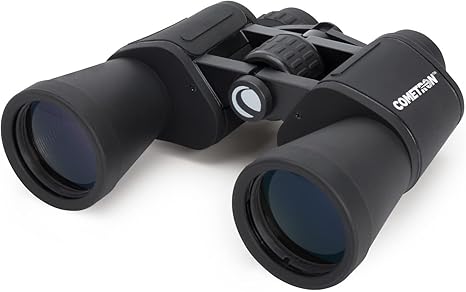
Binoculars are excellent tools for beginners. The Celestron - Cometron 7x50 Binoculars are particularly beginner-friendly, featuring large 50mm objective lenses and 7x magnification. These binoculars are perfect for anyone looking to explore the night sky with ease and clarity. To use binoculars, locate the galaxy with your eyes first and then bring the binoculars up slowly to ensure you keep it in view. The galaxy will appear brighter and more detailed than with the naked eye.
Observing with a Telescope
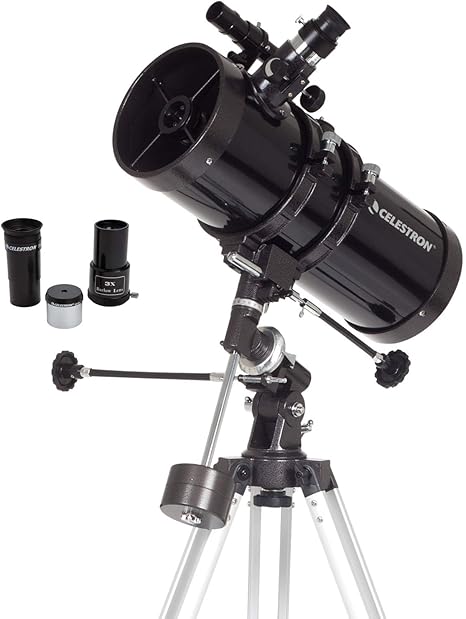
If you have access to a telescope, you can see even more details of Andromeda. The Celestron - PowerSeeker 127EQ Telescope with finderscope is a great option. It’s a manual German equatorial telescope for beginners that is both compact and portable. As a bonus, it includes an astronomy software package, making it easier to explore and understand the night sky. With a telescope, you may observe Andromeda’s spiral arms and its bright core.
Optimal Viewing Conditions
To get the best view of the Andromeda Galaxy, it's essential to find a dark-sky location, away from city lights. Moonless nights provide the best conditions for observing faint celestial objects. Allow your eyes to adjust to the darkness for about 20-30 minutes before you start looking for Andromeda.
Happy stargazing!
Comments
Post a Comment