
This Week's Best Picks from Amazon

Please see more curated items that we picked from Amazon here .

Are you a North Texas or South Oklahoma sky watcher looking for the perfect spot to gaze at the stars? Look no further! The Texas Astronomical Society (TAS) offers a fantastic dark sky observing site in Atoka, Oklahoma. This location is ideal for stargazing, with its low light pollution and clear skies.


With a family membership of around $50, the Texas Astronomical Society (TAS) provides access to its dark sky star gazing site in Atoka, OK, which includes an observatory, telescope pads, barbecuing area, and camping spots.

Why Now is the Best Time to Start Gazing

This month is an excellent time to start planet watching! You can spot some of the brightest planets in the night sky, including Jupiter, Saturn, and Venus. Additionally, you can catch a glimpse of the Andromeda Galaxy, which is visible to the naked eye under dark skies. For a closer look, use binoculars or a telescope to see the Orion Nebula.

Mosaic image by NASA's WISE showing the Flame Nebula, Horsehead Nebula, and NGC 2023 in the Orion Molecular Cloud.


What You Can Spot This Month

  • Planets: Jupiter, Saturn, Venus

  • Galaxies: Andromeda Galaxy

  • Nebulae: Orion Nebula (visible with binoculars or telescope)

  • Constellations: Orion, Canis Major, Puppis

Equipment Recommendations

To enhance your stargazing experience, consider using binoculars or a telescope. Here are some recommendations:

  • Binoculars: Great for beginners and easy to use. They are perfect for spotting the Orion Nebula and other celestial objects.

  • Telescopes: For a more detailed view of planets and galaxies. A good telescope can reveal the intricate details of the Andromeda Galaxy and the Orion Nebula.

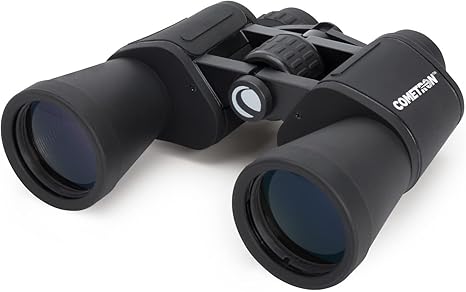
The Celestron - Cometron 7x50 Binoculars are particularly beginner-friendly, featuring large 50mm objective lenses and 7x magnification. These binoculars are perfect for anyone looking to explore the night sky with ease and clarity.

The Celestron - PowerSeeker 127EQ Telescope with finderscope is a great option. It’s a manual German equatorial telescope for beginners that is both compact and portable. As a bonus, it includes an astronomy software package, making it easier to explore and understand the night sky.

Membership and Camping

To access the TAS Atoka site, a membership is required. The membership fee is around $50 for families, which includes access to the site, a subscription to The Spectrum (TAS's monthly newsletter), and The Reflector (Astronomical League's quarterly national newsletter). The site offers concrete pads with electricity for telescopes, restroom facilities, running water, and ample space for camping.

When the weather is good, the Atoka site is an excellent place for camping and stargazing. You can spend the night under the stars, enjoying the beauty of the night sky with fellow astronomy enthusiasts.

Whether you're a seasoned astronomer or just starting out, the Texas Astronomical Society's Atoka site is the perfect place to explore the wonders of the night sky. So grab your binoculars or telescope, join the TAS, and start your stargazing adventure today!

Happy stargazing! 

Comments

Popular posts from this blog

Exploring the Legendary Constellations of the Northern Hemisphere

  As we welcome the crisp, clear nights of February, skywatchers and stargazers in the Northern Hemisphere find themselves in a great position to observe some of the most legendary constellations in the sky. The winter sky offers unparalleled views of these celestial wonders, making it a perfect time to explore the myths and stories behind the stars. While November is the ideal month for observing many of these constellations, you can still witness the magnificent constellations of Andromeda, Cassiopeia, Perseus, Cepheus, Pegasus, and more during the long nights of February. Long ago, Queen Cassiopeia’s pride angered the gods. She claimed her daughter, Andromeda, was more beautiful than the sea nymphs favored by Poseidon. In revenge, the sea god sent the monster Cetus to destroy Aethiopia. To save his kingdom, King Cepheus was forced to sacrifice Andromeda, chaining her to a rock by the sea. As she awaited her fate, Perseus, fresh from slaying Medusa, passed by on his winged horse,...

Witness the Majestic Planetary Alignment on February 28

On February 28th, skywatchers will be treated to a rare and spectacular event: a planetary alignment where Mars, Jupiter, Uranus, Venus, Neptune, Mercury, and Saturn will all line up in the night sky. These celestial events have fascinated humans for centuries, often sparking awe, wonder, and a touch of superstition. A Brief History of Planetary Alignments Throughout history, planetary alignments have been seen as omens or harbingers of significant events. For example, during the February 4, 1962 alignment, the Sun, Moon, and five planets aligned, causing widespread public distress and fears of catastrophic events. Another notable alignment occurred on May 5, 2000, leading to fears that gravitational forces might destroy Earth. More recently, on December 24, 2022, all eight planets aligned, reigniting tales of catastrophic gravitational effects. These events often spark both awe and fear, but they also provide unique opportunities for scientific exploration and observation. Understandi...

February is one of the best times of the year to spot the Andromeda Galaxy, our nearest galactic neighbor. This guide will help you find and observe this magnificent celestial body with the naked eye, binoculars, and telescopes.

The Andromeda Galaxy has fascinated humans for centuries. Known as the Great Andromeda Nebula until the 20th century, it was mentioned by Persian astronomer Abd al-Rahman al-Sufi in his book "Book of Fixed Stars" around 964 AD. Early astronomers believed it to be a nebula within our Milky Way. It wasn't until 1924 that Edwin Hubble confirmed Andromeda as a separate galaxy, vastly expanding our understanding of the universe. How to Spot Andromeda Finding Andromeda with the Naked Eye To find Andromeda, first locate the constellation Cassiopeia, which resembles an "M" or "W" shape in the sky. Draw a line from the star Schedar in Cassiopeia to the Andromeda Galaxy. You can also start from the Great Square of Pegasus and trace the constellation Andromeda to the galaxy. In dark skies, Andromeda will appear as a faint, fuzzy patch. Using Binoculars for a Closer Look Binoculars are excellent tools for beginners. The Celestron - Cometron 7x50 Binoculars are pa...